
Sales-rep contribution — voice attribution
The CRM's «responsible» field is a phone, not a person. AI recovered by voice who really opens and closes deals, and a weekly conversion trend turned the report into a team-management tool.
The problem
A retail company sells mostly over the phone. In the CRM every deal has a «responsible manager» — but that field actually stores a phone number, not a person: the reps work off shared handsets and swap them constantly. As a result the owner couldn't honestly answer simple questions: who really drives sales, who is good at opening a client, and who is good at closing. The standard «by responsible» report was nonsense.
Before
- «Responsible» in the CRM = a phone, not a person — the by-manager report simply lied.
- No way to tell who opened a client and who closed the deal — often different people.
- Where deals are lost and whose conversion is sagging — flying blind.
- «Discount» sales (high conversion, low margin) weren't separated from healthy ones.
What we did
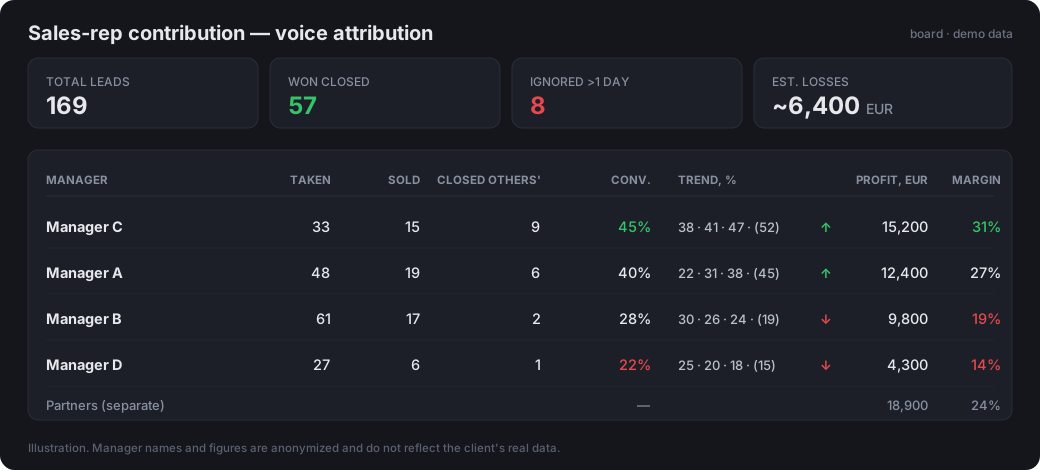
- We built voice-based attribution: AI creates voice profiles of the reps (speaker-ID) and, from the call recordings, determines who actually spoke with the client — regardless of which handset the call came from.
- Each deal gets two roles: opener (the first voice on the first call) and closer (the last voice before the purchasing stage). Profit is credited to the closer.
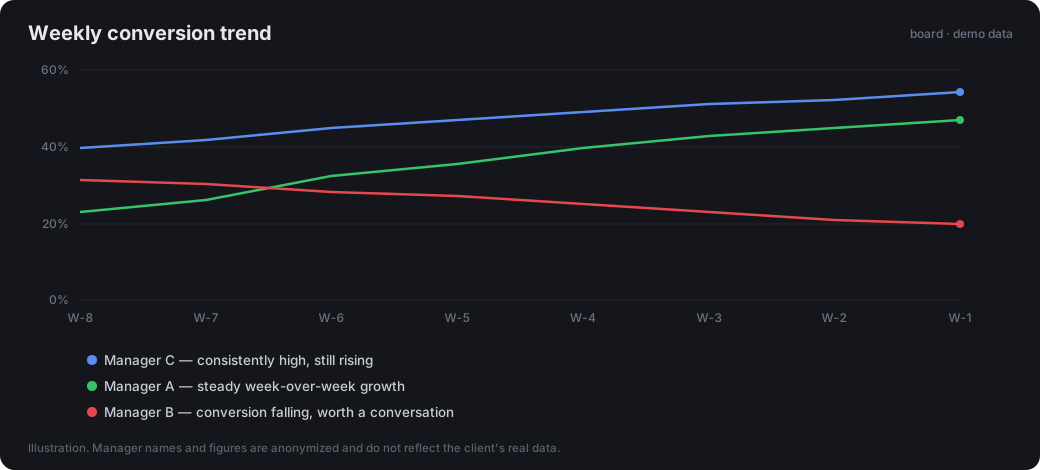
- The dashboard shows, per rep: taken / sold / closed others' / in progress / conversion / profit / margin — plus a weekly conversion trend with a direction arrow.
- A «why I lose» breakdown: lost deals grouped by the outcome of the last call (also parsed by AI).
- Partner sales are split out so they don't distort personal metrics. Margin is computed only on deals with a filled-in purchase cost — otherwise it inflates to a fake 100%.
Results
- The owner finally sees each rep's real contribution — by voice, not by whose handset placed the call. The CRM's «responsible» no longer misleads.
- The opener / closer roles revealed that strong openers and strong closers are often different people. Handoffs between reps are now visible and counted, and cooperation stops being invisible.
- The weekly conversion trend turned the report into a management tool. You can see whose conversion is rising week over week and whose is sagging — and the conversation with the team runs on concrete numbers, not gut feel. Reps see their own trend, and that alone spurs them on: a weekly target is more tangible and motivating than a single month-end total.
- Low margin alongside high conversion instantly flags whoever «makes the numbers» through discounts.
- The «why I lose» breakdown gives concrete material to work with — not a vague «you sell too little», but the actual reasons deals are lost.
The client's name is withheld under NDA. Real names and details are shared at the brief.
A similar task?
Describe it briefly — within 1–2 days we'll come back with an analysis and an hourly estimate. If a packaged solution fits, we'll say so honestly.